
Remembering the Prophetic Critique
A response to Dan McClellan

It has been a while. This past year has been extremely difficult for me, but also much of the work I have done is more geared for academic publication, so I haven’t posted any of it here. Stay tuned for updates on that, including what I think is a very good paper on one of the subjects here, the book of Job, which G-d willing will be submitted for publication at some point in the future - though life circumstances need to be resolved prior to this.
Dan McClellan has just released a short video that I want to critique, in order to make a broader point about the bible that I think is incredibly important and seriously overlooked in most bible-reading circles. And, as is my wont, I am going to spend about 4,000 6,500 words responding to that three-odd minutes. I hope that is forgivable. McClellan is, I think, a force for good in the world, and he has accepted critiques of his work from me, and argued with me in the best faith possible at multiple times (and which got me into the acknowledgements of his latest book, alongside a bunch of wonderful people). However, he has previously accepted a critique of mine on this point, which makes me feel all the more compelled to make the point I was trying to make the same more publicly, both to expose more people to these issues and to make the point far clearer, as perhaps I was not clear enough about it before. The video opens with the exhortation that:
“A lot of Christians these days would do well to remember the prophetic critique”
He then rightly criticizes those who would read the critique of Isaiah and Amos levelled at the cult as a rejection of the cult in toto, and those who would describe the prophets as “proto-Protestants” who “hate ritual” and “really just love faith,” which is not the case – the prophets describe G-d as rejecting the cult because those who bring offerings and carry out the rituals have defiled themselves and the offerings they bring by their failure to adhere to the moral norms that G-d demands of them. So far so good.
However, he concludes the video by saying:
And so when Jesus says, “Go and learn what that means. ‘I will have mercy and not sacrifice,’” he’s talking to the people that he calls hypocrites for praying on the street corner to be seen of men. He says they have their reward because they’re doing this not to advance society or their own relationship with God; they’re doing it in order to advance their own interests within the society over and against the express purposes of the law. That’s what the prophetic critique is and that’s what a lot of Christians today are ignoring as they try to champion the advance of Christianity within society.
While both the introduction and conclusion of the video make clear the target audience of the video and the rhetorical thrust of the video is (it is intra-Christian critique aimed at a Christian audience), there is a significant amount to unpack here, and the consequences of the in-group signalling that that entails in terms of how the texts in question are read are worth examining.
To be clear, I do not object in the slightest to the moral exhortation that this video makes – in fact I agree with it entirely. In McClellan’s parlance “I agree with his rhetorical goals, but have some concerns.” I strongly disagree with the means by which those goals are advanced. What I object to is the decontextualization and dehistoricization of the biblical texts involved, couched in terms that present themselves as a scholarly correction of a misunderstanding of the texts. This makes it appear as if the citation of these texts is scholarly, and this message is the message of both the prophets in question and Jesus – however both the Prophets and the gospel from which McClellan quotes are saying more, and saying something more morally problematic – something no listener would be aware of from McClellan’s framing. While McClellan has a strongly held moral position regarding the present, which I share, my moral concern extends into the past, and I do not believe that rhetorical expedience in the present can or should trump proper concern for the past, both in terms of the academic discipline of historical biblical studies and in terms of concern for those who suffered within the past.
Firstly, what is quoted as the words of Jesus come from the Gospel of Matthew (9:13),1 despite McClellan being on the record as arguing (correctly) that we can’t know what Jesus actually said. In its original context, these words also act as a segue into one of the many polemics against the religiosity of the Pharisees that characterize the Gospel of Matthew (9:14-7, see also the repetition of the quotation from Hosea in 12:7). This leads into an invocation of Matt 6:5, in which those who McClellan accuses of a religious practice that prioritizes “their own interests within the society over and against the express purposes of the law” includes not just those who pray on streetcorners but also those who pray in synagogues – Matthew’s Jesus appears to demand of those who he is speaking that they not participate in communal prayer, which is not particularly friendly to those for whom communal prayer is a divine commandment.
Of course, as McClellan acknowledges elsewhere, it would be wrong to make an unqualified claim that Jesus himself ever said such a thing, but that only adds to the problematic nature of the rhetoric being employed here, as it is said not just of those who pray on street corners but also those who pray in Synagogues that “they have their reward” in contradistinction to those who pray in private, to whom he says “your Father who sees in secret will reward you” (Matt 6:6). The contrast of tense here implies there is no future reward for those who pray communally in synagogues, an observation that Ulrich Luz rightly finds “very troublesome.”2 This, may indicate this is an ex eventu reference to the destruction of the Temple in 70CE.3 I do not know if McClellan intends the observation that this is the Matthean Jesus is participating in the same kind of “Prophetic Critique” but if he is I firmly agree with him, and this illustrates that the Prophetic Critique consists of two parts: accusation and invocation of punishment. However, as this framing should have made clear, the observations about the original Prophetic Critique, that it is not a rejection of the cult in toto may not be something the Matthean Jesus is aware of or has in view in his citation of Hosea. The context, and the violence involved in these invocations leads us back to the prophets.
Let us now examine the language that the prophetic critique is couched in. Isaiah says:
ה֥וֹי אַשּׁ֖וּר שֵׁ֣בֶט אַפִּ֑י וּמַטֶּה־ה֥וּא בְיָדָ֖ם זַעְמִֽי׃
בְּג֤וֹי חָנֵף֙ אֲשַׁלְּחֶ֔נּוּ וְעַל־עַ֥ם עֶבְרָתִ֖י אֲצַוֶּ֑נּוּ לִשְׁלֹ֤ל שָׁלָל֙ וְלָבֹ֣ז בַּ֔ז [וּלְשׂוּמ֥וֹ] מִרְמָ֖ס כְּחֹ֥מֶר חוּצֽוֹת׃
Hoi! Assyria! Rod of my anger! the very staff in their hands is my fury!
Upon a nation of defilement I have unleashed him, against a nation that has provoked me I have commanded him. He will take its spoil as spoil, and its pillage as pillage, and make it a trampled thing like the dirt of the streets (10:6-7).
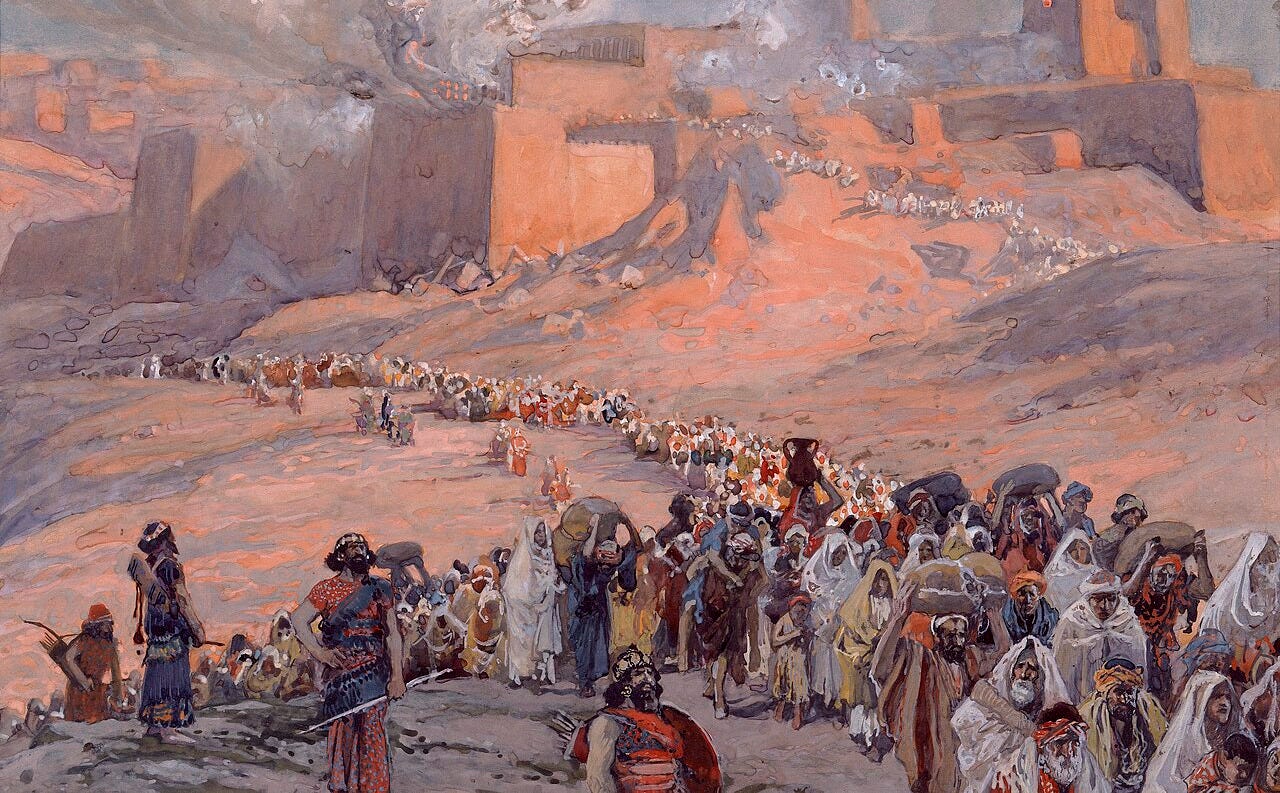
Here it is made explicit that the prophetic critique, while it may in part be aimed at the nation’s leaders and the heads of the cult, is not solely an indictment of them – and, more importantly, this indictment comes with the announcement of punishment, and that punishment is both indiscriminate and consists of real historical events (even if rhetorically heightened). Isaiah and Amos’ condemnation of those who, in the words of the latter, “sell the poor for a pair of sandals” (2:6) is justification for the brutal destruction and deportation of the Northern Kingdom of Israel by Assyria.
While it is also a historical fact that this was indiscriminate, this is also explicit within the oracles of Amos himself:
כֹּה֮ אָמַ֣ר ה’ כַּאֲשֶׁר֩ יַצִּ֨יל הָרֹעֶ֜ה מִפִּ֧י הָאֲרִ֛י שְׁתֵּ֥י כְרָעַ֖יִם א֣וֹ בְדַל־אֹ֑זֶן כֵּ֣ן יִנָּצְל֞וּ בְּנֵ֣י יִשְׂרָאֵ֗ל הַיֹּֽשְׁבִים֙ בְּשֹׁ֣מְר֔וֹן בִּפְאַ֥ת מִטָּ֖ה וּבִדְמֶ֥שֶׁק עָֽרֶשׂ׃
Thus said ה’: as the shepherd plucks from the mouth of a lion two shanks or part of an ear, so too shall be the rescue of Israel and those who dwell in Samaria: with the head of a bed or the foot of a couch (3:12).4
The imagery here is dark to the point of bleak humour – those who are “plucked” from the destruction of Samaria will only survive in pieces, like no longer living scraps pulled from the jaws of a feeding lion, or fragments of shattered furniture. There is no provision here that this only happens to the wicked, in the prophets punishment is collective: it is the morality of the nation as a whole which is judged, and it is the whole of the nation who is punished. It is likewise unambiguous who is responsible for this:
אִם־יִתָּקַ֤ע שׁוֹפָר֙ בְּעִ֔יר וְעָ֖ם לֹ֣א יֶחֱרָ֑דוּ אִם־תִּֽהְיֶ֤ה רָעָה֙ בְּעִ֔יר וַה’ לֹ֥א עָשָֽׂה׃
If a shofar sounds in a town, do people not shudder?
And if catastrophe comes upon a town, is it not ה’ who acts? (3:6).
These acts of wholesale destruction are the acts of the Deity himself.
My Hebrew professor studied at Sheffield, and the influence of the Sheffield School permeated the classes in which I learnt the Hebrew texts, paying extremely close attention to the text itself and its internal problematics; to its context being shaped by actual historical events that clearly occurred, and to the responses to the aftermath of those events. The late Sheffield professor, David Clines wrote a profound essay on biblical-scholarly responses to the texts of the prophets, focusing on commentaries on Amos. In this essay he writes of scholars’ responses to the violence of the text:
The denunciation of the rich […] “Woe to those who lie on beds of ivory,” […] comes to a conclusion with such a ‘therefore’: “Therefore they shall be the first of those to go into exile” (6.7). And to the sin of Amaziah in forbidding Amos to prophesy, there is the same ‘therefore’ of punishment: “Therefore thus says the LORD, Your wife shall be a prostitute in the city...” (7.17)—which Amos, interestingly enough, thinks of as a punishment of him.
What do the commentators make of this ideology? They never discuss it; they only repeat it. […] Nor do the commentators seem to notice the conflict between the apparent justice of punishing those who deserve it and the obvious injustice of punishing those who do not. Mays, for example, can write that the “prophecy of Amos can be heard as [ה’]’s response to their [the poor’s] cry, for the weak and poor are the special objects of [ה’]’s compassion and concern;” but at the same time he can say that “the consistent burden of his [Amos’s] oracles is to announce the disaster that will fulfil [ה’]’s decree of an end for his people.” He doesn’t seem to notice that [ה’] can’t be very compassionate to the poor if he intends them to be carried into exile because of the wrongdoing of their leaders, or that the prophet’s demand for justice does not seem to apply to the deity.5
Now, it would be grossly unfair of me to argue that McClellan is doing the same thing as the commentators on Amos that Clines is indicting here. However what Clines is identifying is something that is endemic to Christian deployment of the Prophetic Critique, and something which is enabled in a particularly insidious way by the second-hand invocation of the Critique by way of the New Testament. The New Testament citation of the Critique universally relies on shearing these words away from their historical context and applying them to the NT authors’ present, and thus (often, not always) blunts the invocation of violence inherent to the invocation of words of condemnation that justified the very real and extraordinarily violent actions of Assyria and Babylon against Israel and Judah which are the subject of these oracles of judgement. This is doubled by such deployment often being retrojected into a pre-70CE environment in order to make it appear as if the action of the Romans was justified by the sins of Judaea. This, likewise, enables Christian “remnant theology” which excises the word “remnant” from its original meaning as those who had survived the brutality of ancient siege warfare, the reality of which is expressed so terrifyingly in Eicha:
כָּל֨וּ בַדְּמָע֤וֹת עֵינַי֙ חֳמַרְמְר֣וּ מֵעַ֔י נִשְׁפַּ֤ךְ לָאָ֙רֶץ֙ כְּבֵדִ֔י עַל־שֶׁ֖בֶר בַּת־עַמִּ֑י בֵּֽעָטֵ֤ף עוֹלֵל֙ וְיוֹנֵ֔ק בִּרְחֹב֖וֹת קִרְיָֽה׃
לְאִמֹּתָם֙ יֹֽאמְר֔וּ אַיֵּ֖ה דָּגָ֣ן וָיָ֑יִן בְּהִֽתְעַטְּפָ֤ם כֶּֽחָלָל֙ בִּרְחֹב֣וֹת עִ֔יר בְּהִשְׁתַּפֵּ֣ךְ נַפְשָׁ֔ם אֶל־חֵ֖יק אִמֹּתָֽם׃
my eyes are worn from my tears, my stomach is sick within me, my liver is poured out on the earth on account of the shattering of the daughter of my people. Children and babies languish in the squares of the city.
They ask their mothers “where is bread and wine?” as they languish like the slain in the squares of the town. Their life pours out on the bosoms of their mothers (2:11-2).
This is not to pass an absolutist moral judgement on those authors – to do that would be a step beyond the scholarly realm, but that kind of presentist exegesis can only give license to non-historical-critical appropriations of these texts. The work of the scholar is not to perform the same kind of exegesis as we see in the NT, or at Qumran, or in the Rabbinic literature.
But in McClellan’s video we see the other way in which this context can be stripped from the texts – a moral exhortation which does mirror the condemnation/announcement of punishment form of the Prophets, but with that form occluded by way of its deployment as a purely moral exhortation with the announcement of punishment obscured. That this occurs in a form that also appeals to scholarly norms by way of the dismissal of prior, clearly wrong interpretations of these texts is particularly concerning.
However there is another element here that I think bears particular attention. McClellan speaks of the critique being found in “Isaiah and in Jeremiah and Hosea and Amos and Micah and Zechariah and elsewhere.” Putting aside the couching of this critique in terms of violence against an unfaithful spouse in both Hosea and Jeremiah (and most disturbingly in the uncited Ezekiel), there is another feature of both Jeremiah and Isaiah that is worth noting: the couching of the punishment for transgression in the vocabulary of the cherem: the ban, or devotion to utter destruction.
Jeremiah describes the imminent destruction of Jerusalem:
לָכֵ֕ן כֹּ֥ה אָמַ֖ר ה’ צְבָא֑וֹת יַ֕עַן אֲשֶׁ֥ר לֹֽא־שְׁמַעְתֶּ֖ם אֶת־דְּבָרָֽי׃
הִנְנִ֣י שֹׁלֵ֡חַ וְלָקַחְתִּי֩ אֶת־כׇּל־מִשְׁפְּח֨וֹת צָפ֜וֹן נְאֻם־ה’ וְאֶל־נְבוּכַדְרֶאצַּ֣ר מֶלֶךְ־בָּבֶל֮ עַבְדִּי֒ וַהֲבִ֨אֹתִ֜ים עַל־הָאָ֤רֶץ הַזֹּאת֙ וְעַל־יֹ֣שְׁבֶ֔יהָ וְעַ֛ל כׇּל־הַגּוֹיִ֥ם הָאֵ֖לֶּה סָבִ֑יב וְהַ֣חֲרַמְתִּ֔ים וְשַׂמְתִּים֙ לְשַׁמָּ֣ה וְלִשְׁרֵקָ֔ה וּלְחׇרְב֖וֹת עוֹלָֽם׃Therefore, thus said ה’ of Hosts: because you have not obeyed my words –
Look: I am sending for all the clans of the north – oracle of ה’ – and for Nebuchadnetzar, king of Babylon, my servant, and will bring them all against this land, and all the inhabitants and all the nations around, and I will cherem them, and make them a waste, an object of derision, a desolation for all time (25:8-9).
Even in the announcement of redemption from exile this language in the latter part of Isaiah this is repeated:
אָבִ֥יךָ הָרִאשׁ֖וֹן חָטָ֑א וּמְלִיצֶ֖יךָ פָּ֥שְׁעוּ בִֽי׃
וַאֲחַלֵּ֖ל שָׂ֣רֵי קֹ֑דֶשׁ וְאֶתְּנָ֤ה לַחֵ֙רֶם֙ יַֽעֲקֹ֔ב וְיִשְׂרָאֵ֖ל לְגִדּוּפִֽים׃
Your earliest fathers sinned, and your intermediary transgressed against me.
So I killed6 the leaders of holiness, and I gave over Jacob to cherem, and Israel to mockery (Isa 43:28).
McClellan has commented extensively on the cherem previously, even devoting an entire episode of his podcast to the topic. While the cherem is one of the most troubling features of the bible, in that it is, for all intents and purposes, a divine commandment of genocide (Deut 20:16-17), its other appearances are just as troubling. That this includes the subjection of G-d’s own people to such a fate, often translated as “devotion to destruction,” is particularly difficult. Leviticus clearly connects the cherem to the cult, and in order to complete the cherem that Saul failed to adhere to Samuel strikes down Agag at the altar “before ה’” (1 Sam 15:33). In his monograph on the subject of the cherem, after surveying a frankly overwhelming amount of evidence including significant pre-Biblical evidence from Ugarit, Mari and elsewhere, Philip D. Stern writes that passages like Isa 43:28 “evince an acute awareness of the sacral connotations of the root חרם and this is indicated by the context and/or subtext of their language and the figurative way they employed it.”7 The authors of Jeremiah and Isaiah know what they are doing, and simple condemnation does not explain why the texts are the way they are. A moral condemnation of the ideology of the cherem, or discomfort at the deployment of that ideology against Israel rather than its enemies does little to explain the cultural context in which these texts are composed, nor can it explain the disjunction between that and their later reception, or their deployment in the present. The scholarly judgment that the Deuteronomic cherem probably wasn’t carried out doesn’t disarm the effect of those texts in the present, and neither does the trivial observation that what they describe is morally reprehensible – that kind of etic judgement is not explanatory, and is of limited use in explaining how these texts function. And simple etic judgements, like presenting the prophets as championing a form of social judgment that can be unproblematically transposed into to the present, impede rather than aid understanding of the texts.
The conclusion that should be reached from this brief excursus both into the texts themselves and their historical backdrop should confound any attempt to leverage these texts toward any simple moral point, such as that:
for all of these prophets, the purpose of the law of Moses was the generation and curation of a just and a righteous society where everybody has what they need to get by. And in this system, the canaries in the coal mine of cosmic and social justice and order were the orphan and the widow and the poor and the oppressed and the foreigner. So if they were doing bad, that portended bad things for the rest of society.
The poor treatment of the most vulnerable in society might be condemned, but so are foreigners in the many oracles against the nations (such as in the first chapter of Amos, and throughout the rest of the Prophets). And the social order envisaged as ideal is still thoroughly hierarchical, in which women serve more of a role as symbols than people, and those symbolic women are often subjected to horrific abuse. The restoration of the proper order of the world in Deutero-Isaiah involves the humiliation of the feminine Babylon,8 and the restoration of Israel to their proper place at the height of the order of creation, redeemed to serve the cult of the creator. This narrative of redemption is couched in cosmogonic language which is also an aetiology of cult, hierarchy and property relations in which G-d is supreme monarch and Israel, both the land and the people, are his hereditary property. It is not only the mistreatment of the vulnerable which is a sign of cosmic imbalance, but any disruption of this entire system – and when disruption occurs, punishment is collective and brutal.
This is an austere observation, but the Bible is the product of austere social conditions. The majority of the text is the product of historical conditions of existential threat and the aftermath of destruction, first by Assyria and then by Babylon. Walter Brueggeman has observed that theodicy – in the strict sense of justification of G-d – is a central concern of the entire bible, however the Bible, and the prophets, are not univocal on this point.9 Jeremiah delivers his message of doom, but within that are extended laments, including lament in the form of a dialogue between the prophet and G-d. G-d laments what he is doing (4:11-22), and the people lament G-d’s inaction in the face of their destruction: למה תהיה כאיש נדהם כגבור לא יוכל להושיע? “why are you like a weak man, a warrior who cannot save?” (14:9). In both the theodic and anti-theodic passages the biblical authors are asking the question “why?” and “how could this happen?” which itself is a possible translation of the Hebrew title of Lamentations, Eicha.
In reading what Dalit Rom-Shiloni describes as a dialogue consisting of justification, doubt and protest, the moral landscape represented within the biblical texts both becomes clearer and significantly more complicated.10 It also becomes clear that to pick a side, so to speak, entails a refusal to hear the voice of the others – to embrace the text in its totality one cannot side with prophets nor elites, with the Deuteronomist nor with the priestly authors, nor with G-d nor the people. Besides, siding with Amos’ speaking on the behalf of the poor seems to morally implicate G-d in the destruction of the very poor ostensibly being defended, as Clines so perceptively points out. This itself shows that some voices are notably absent: after all, those sold for a pair of sandals by the rulers of Samaria never wrote anything, and met the same fate as the rulers. No one perspective encompasses the totality of what is represented, there is instead only the compulsion of Eicha:
רְאֵ֤ה ה’ וְֽהַבִּ֔יטָה לְמִ֖י עוֹלַ֣לְתָּ כֹּ֑ה
וְלֹ֥א הָיָ֛ה בְּי֥וֹם אַף-ה’ פָּלִ֣יט וְשָׂרִ֑יד אֲשֶׁר־טִפַּ֥חְתִּי וְרִבִּ֖יתִי אֹיְבִ֥י כִלָּֽם׃
Look, ה’ and take note of those you have treated with such severity!
[…]
none escaped and none survived on the day of ה’’s wrath, and those I reared and those I raised the enemy consumed (Lam 2:20-2).
The scholar’s job is to look and to take note, without passing judgement. Scholarly work focuses on emic analysis and cannot take sides within the text without retrojecting anachronism into history. It is only after emic analysis is complete that any etic judgement can be made, and such is itself made within its own historical context, of which the scholar must be aware.
To conclude I wish to share an Agadah, from Eicha Rabbah (2:4), a shorter version of which is also contained in the Bavli (Gittin 57b). It reads:
שְׁמוֹנִים אֶלֶף פִּרְחֵי כְּהֻנָּה נֶהֶרְגוּ עַל דָּמוֹ שֶׁל זְכַרְיָה. רַבִּי יודָן שָׁאַל לְרַבִּי אַחָא הֵיכָן הָרְגוּ אֶת זְכַרְיָה בְּעֶזְרַת יִשְׂרָאֵל אוֹ בְּעֶזְרַת נָשִׁים, אָמַר לוֹ לֹא בְּעֶזְרַת יִשְׂרָאֵל וְלֹא בְּעֶזְרַת נָשִׁים, אֶלָּא בְּעֶזְרַת כֹּהֲנִים, וְלֹא נָהֲגוּ בְּדָמוֹ לֹאכְדַם צְבִי וְלֹא כְדַם אַיָּל, תַּמָּן כְּתִיב (ויקרא יז, יג)וְאִישׁ אִישׁ מִבֵּית יִשְׂרָאֵל אֲשֶׁר יָצוּד צֵיד חַיָּה וגו’ וְכִסָּהוּ בֶּעָפָר, בְּרַם הָכָא כְּתִיב (יחזקאל כד, ז) כִּי דָמָהּ בְּתוֹכָהּ הָיָה עַל צְחִיחַ סֶלַע שָׂמָתְהוּ לֹא שְׁפָכַתְהוּ עַל הָאָרֶץ לְכַסּוֹת עָלָיו עָפָר, וְכָל כָּךְ לָמָּה (יחזקאל כד, ח) לְהַעֲלוֹת חֵמָה לִנְקֹם נָקָם נָתַתִּי אֶת דָּמָהּ עַל צְחִיחַ סֶלַע לְבִלְתִּי הִכָּסוֹת. שֶׁבַע עֲבֵרוֹת עָבְרוּ יִשְׂרָאֵל בְּאוֹתוֹ הַיּוֹם, הָרְגוּ כֹּהֵן וְנָבִיא וְדַיָּן, וְשָׁפְכוּ דַם נָקִי וְחִלְּלוּ אֶת הַשֵּׁם וְטִמְּאוּ אֶת הָעֲזָרָה, וְשַׁבָּת וְיוֹם הַכִּפּוּרִים הָיָה, וְכֵיוָן שֶׁעָלָה נְבוּזַרְאֲדָן חַזְיֵיהּ לִדְמֵיהּ דִּזְכַרְיָה דַּהֲוָה קָא רָתִיחַ, אֲמַר לְהוֹן מַאי הִיא, אָמְרוּ לֵיהּ דַּם פָּרִים וּכְבָשִׂים, אַיְיתֵי פָּרִים וּכְבָשִׂים וְלָא אִידוּם, אַיְיתֵי כָּל מִינֵי דָמִים וְלָא אִידוּם, אֲמַר לְהוֹן אִי אַמְרִיתוּ לִי מוּטָב וְאִי לָא אֲנָא מַסְרֵיקְנָא לְבִישְׂרָא דַּהֲנָךְ אֵינָשֵׁי בְּמַסְרֵיקִין דְּפַרְזְלָא וְלָא אֲמָרוּ לֵיהּ, וְהַשְׁתָּא דַּאֲמַר לְהוֹ הָכֵי אָמְרוּ לֵיהּ מַה נְּכַסֵּי מִינָךְ, נְבִיָּיא כַּהֲנָא הֲוָה לָן וַהֲוָה מוֹכִיחַ לָן לְשׁוּם שְׁמַיָא קַבִּילוּ, וְלָא קַבְּלֵינַן מִינֵיהּ אֶלָּא קָאֵימְנָא עִילָּוֵיהּ וְקַטְלִינַן לֵיהּ. אֲמַר לְהוֹן אֲנָא מְפַיַּיסְנָא לֵיהּ, אַיְיתֵי סַנְהֶדְּרֵי גְדוֹלָה שָׁחַט עִילָּוֵיהּ וְלָא נָח. שָׁחַט סַנְהֶדְּרֵי קְטַנָּה עִילָּוֵיהּ וְלָא נָח. אַיְיתֵי פִּרְחֵי כְּהֻנָּה שָׁחַט עִילָּוֵיהּ וְלָא נָח. שָׁחַט תִּינוֹקוֹת שֶׁל בֵּית רַבָּן עִילָּוֵיהּ וְלָא נָח. אָמַר לוֹ זְכַרְיָה טוֹבִים שֶׁבְּעַמְּךָ אִבַּדְתִּי רְצוֹנְךָ שֶׁיֹּאבְדוּ כֻּלָּם, לְאַלְתָּר נָח. וְהִרְהֵר נְבוּזַרְאֲדָן הָרָשָׁע תְּשׁוּבָה וְאָמַר, וּמַה מִּי שֶׁמְאַבֵּד נֶפֶשׁ אַחַת מִיִּשְׂרָאֵל כָּךְ כְּתִיב בּוֹ (בראשית ט, ו) שֹׁפֵךְ דַּם הָאָדָם בָּאָדָם דָּמוֹ יִשָּׁפֵךְ, אוֹתוֹ הָאִישׁ שֶׁאִבֵּד נְפָשׁוֹת הַרְבֵּה, עַל אַחַת כַּמָּה וְכַמָּה, מִיָּד נִתְמַלֵּא הַקָּדוֹשׁ בָּרוּךְ הוּא רַחֲמִים וְרָמַז לַדָּם וְנִבְלַע בִּמְקוֹמוֹּ
Eighty thousand young priests were killed over the blood of Zekharya. Rabbi Yudan asked Rabbi Aḥa: ‘Where did they kill Zekharya, in the Israelite courtyard or the women’s courtyard?’ He said to him: ‘Neither in the Israelite courtyard nor in the women’s courtyard, but rather in the priestly courtyard.’ They did not treat his blood like the blood of a gazelle nor like the blood of a deer. There it is written: “Any man from the children of Israel, or from the strangers who resides among them, who shall hunt game of a beast…he shall [pour out its blood and] cover it with dirt” (Leviticus 17:13). However, here it is written: “For its blood was within it; on a bare rock it placed it. It did not pour it on the ground to cover it with dirt” (Ezekiel 24:7). Why to that extent? “To arouse fury to take vengeance, I placed its blood upon the bare rock that it not be covered” (Ezekiel 24:8).
Israel performed seven transgressions on that day: They killed a priest, a prophet, and a judge, they spilled innocent blood, they desecrated the Name, they impurified the Temple courtyard, and it was Shabbat and Yom Kippur. When Nevuzaradan ascended, he saw that the blood of Zekharya was boiling. He said to them: ‘What is this?’ They said to him: ‘It is the blood of bulls and sheep.’ He brought bulls and sheep but [their blood] was not similar. He said to them: ‘If you tell me, fine. But if not, I will comb the flesh of these people with a comb of iron,’ but they did not tell him. When he said this to them, they said to him: ‘Why should we conceal it from you? We had a prophet, a priest, who would reprimand us in the name of Heaven, [saying] ‘Accept [my words],’ but we did not accept it from him. Rather, we rose against him and killed him.’ He said to them: ‘I will assuage it.’ He brought the Great Sanhedrin and slaughtered them onto it, but it did not rest. He slaughtered the lesser Sanhedrin onto it, but it did not rest. He brought young priests and slaughtered them onto it, but it did not rest. He slaughtered schoolchildren onto it, but it did not rest. He said to it: ‘Zekharya, I have eliminated the best of your people. Is it your will that all of them will be eliminated?’ Immediately, it rested. That wicked one contemplated repentance, and said: ‘One who eliminates a single Israelite soul, it is written in his regard: “Whoever sheds the blood of man, his blood will be spilled by man” (Genesis 9:6), this man who eliminated many souls, all the more so.’ Immediately, the Holy One blessed be He became filled with mercy for them, and He intimated to the blood, and it was absorbed in its place.11
Chazal here are trying to understand the enormity of what has occurred, having previously dealt with both the revolts against the Romans, before turning to the destruction of 586BCE. While they accept without question the dominant theodicy of the bible, that these things happened because of Israel’s sins, the model of retribution here is not one in which retribution is the pure act of Divine will, but rather one in which transgression itself has a metaphysical reality, embodied here in the spilt blood of the righteous. Rather than punishment being unilateral, there is a reciprocal relationship in which action taken by humans can itself affect the relenting of G-d in his pursuit of justice, which appears compelled by the signs of transgression found in the world. Likewise, divine wrath against Israel can be prolonged by these features: the failure to assuage the blood of the prophet compels further wrath, but the assuaging of the blood causes G-d to relent in his punishment. This implies that the proportionality or justice of the wrath involved is, in part, out of the hands of G-d, and determined by human response to punishment – the human response to wrath takes on an almost theurgical nature.
In part, this is itself a kind of theodicy, in which G-d’s actions against Israel are compelled, and the question of proportionality – and thus of the justice of the punishment meted out – becomes distributed, rather than a question that fundamentally threatens the idea that G-d is just, and has the moral nature necessary to judge the righteousness of the world and find it wanting. However, rather than just what some would derisively called an “apologetic” manoeuvre, this is also a reflection of the theology of the biblical texts itself, and the ambivalence – G-d is good, G-d is a G-d of justice, and calls on his people: שנאו רע ואהבו טוב, “hate evil and love good,” but yet he also describes himself: עושה שלום ובורא רע אני ה’ עושה כל אלה “making wellbeing and creating evil, I, ה’ do all this,” which 1QIsaa “corrects” to replace שלום, peace or wellbeing, with טוב, good.12 In a previous essay I also described reading the book of Ruth, and Naomi’s accusation that G-d has done רע to her as similar to other narratives in the bible, in which the mood and actions of G-d appear to just kind of happen to people, and are treated by those people as like changeable weather. As theological understandings shift and develop, these passages becoming problematic and require reinterpretation, but the discomfort with these passages persists.
However, there is another concept active here as well, one which likewise does not accord with much modern theology, particularly that of Christians. That concept is the covenant, which is likewise discussed in the same essay on Dalit Rom-Shiloni’s methodological approaches to reading the destruction of Jerusalem in 586BCE. Perhaps one of the most difficult issues to square with later, more philosophical conceptions of G-d is that the covenantal relationship between G-d and Israel is not just reciprocal but reciprocally binding. This is one of the key differences between the Assyrian vassal treaties which scholars generally regard as the blueprint for Deuteronomy, in that Deuteronomy says that G-d will do certain things if Israel obeys him, rather than just saying that if one doesn’t obey, one will suffer a myriad of curses, as in the Assyrian treaties. While this paradigm can provide an explanation for disasters that befall others, such as the Judahite accounts of the destruction of the Northern Kingdom of Israel, or those who have come before you, like Jeroboam and Manasseh, despite the Deuteronomistic History’s best attempts, it has difficulty explaining what is happening to one in the present, such as Jeremiah. Chazal, in their presentation of G-d’s wrath as being subject to external compulsion are drawing not just on biblical verbiage of “blood crying out from the earth” compelling action in response to moral wrong, but of the very relationship of the covenant that virtually all of the Bible takes for granted in which it is the deity whose action is thus compelled. But this covenantal paradigm, relative to the destruction of Judah brings up a natural question in response to overwhelming violence: what if G-d didn’t hold up his side of the bargain? Chazal’s answer is that any excess is compelled. But that answer is not always going to be satisfying – and is not satisfying to all the authors whose works the Bible preserves.
It is in this context that, against, justification, the other two aspects of Rom-Shiloni’s analysis – doubt and protest – come to the fore. While justification is still the dominant mode of the texts that respond to the Destruction, even in texts like Eicha, these other elements maintain themselves, most emblematically in the words of the titular character of the book of Job, who is subject to Deuteronomic punishments while existing outside of the covenant, and, even in his protest against G-d appears to validate the Deuteronomic social ideal in his entirely independent oath of innocence, which he describes as a “covenant” made in protest against G-d (31:1-40). It has also been pointed out that much of Job’s complaint structurally mirrors the prophetic critique, inverting the “covenant lawsuit” or ריב (riv).13 While this has been characterized as based on an inversion of the Deuteronomic social order, it can also be read as an inversion of the prophetic critique, subjecting the critique to its own critique as being based on an assumed order of justice, but, in the end, dependent only on its own self-justification in the face of the suffering that occurs within said order – even as it claims for itself the title of “social justice.”14 Any call for human justice authorized by any divine name can equally be countered by a question of what idea of justice the critique is based on, and what obligations of reciprocity demand it – what kind of relation does justice inhere in? And, more importantly, who decides? And if one appeals to a text, what licenses that text, and what are the consequences of affirming it?
The point I want to make here is not that McClellan’s moral exhortation is wrong, but rather that the form in which the critique is couched in both the Biblical and New Testament texts is part of its meaning, and the implications of all of this need to be teased out, confronted, and dealt with completely and honestly, at least insofar as such is possible. That Christians (or Jews, or anyone else for whom these texts are important) would “do well to remember the prophetic critique” means to remember it completely, and to not just pass over in silence the parts of it which invoke extreme violence (or extreme violence against women in particular, as is the case in what I myself have not addressed in this short piece, but if you want to confront the worst read Ezekiel 23). It is only after a thorough accounting of all this that homiletics, theology, or even the simple extraction of moral values from these texts can be done – and perhaps the most important thing that can be learnt is that the violence is there, whether we acknowledge it or not, and it is what we do in the face of that that makes all the difference.
Bibliography
Clines, David J. A. “Metacommentating Amos.” In Interested Parties : The Ideology of Writers and Readers of the Hebrew Bible. Journal for the Study of the Old Testament Supplements, 76-93. Sheffield: JSOT Press, 1995.
Habel, Norman C. The Book of Job : A Commentary. Old Testament Library. Philadelphia: Westminster, 1985.
Harding, James Edward. “The Book of Job as Metaprophecy.” Studies in Religion/Sciences Religieuses 39, no. 4 (2010): 523-47. https://doi.org/10.1177/0008429810380187.
Luz, Ulrich. Matthew 1-7 : A Commentary. Translated by James E. Crouch. Edited by Helmut Koester. Minneapolis: Augsburg Fortress, 1989.
McKenzie, John L. Second Isaiah : Introduction, Translation and Notes. Anchor Bible. Garden City, NY: Doubleday, 1973.
Paul, Shalom M. Amos : A Commentary on the Book of Amos. Hermeneia--a Critical and Historical Commentary on the Bible. Edited by Frank Moore Cross. Minneapolis: Fortress Press, 1991.
Rom-Shiloni, Dalit. Voices from the Ruins : Theodicy and the Fall of Jerusalem in the Hebrew Bible. Chicago: Eerdmans, 2021.
Stern, Philip D. The Biblical Herem: A Window in Israels Religious Experience. Brown Judaic Studies. Edited by Ernets S. Frerichs, Wendel S. Dietrich, Calvin Goldscheider, David Hirsch and Alan Zuckerman. Vol. 211, Atlanta, GA: Scholars Press, 2020.
Ticciati, Susannah. Job and the Disruption of Identity : Reading Beyond Barth. London: Bloomsbury, 2005.
Witte, Marcus. “Does the Torah Keep Its Promise? Job’s Intertextual Dialogue with Duteronomy.” In Reading Job Intertextually, edited by Katharine J. Dell and Will Kynes. Library of Hebrew Bible/Old Testament Studies; 574, 54-65. New York: Bloomsbury, 2013.
The scriptural citation is original to Matt, though the narrative is based on Mk 2:17.
Despite Luz failing to address the disjunction in tense and affirming the “traditional” interpretation that it’s not so much about where you pray as how you pray, he writes that “The statement that he will reward correct prayers, which we are “indebted” to the symmetry of the strophes, is very troublesome.” He elaborates on this in a footnote, outside the body text(!) that “The promise is not that prayer in the quiet chamber will be answered but that such prayer will be rewarded at the last judgment.” That which is implied by this symmetry – that those who do not pray rightly according to this teaching will suffer the inverse fate – is indeed highly troubling. Ulrich Luz, Matthew 1-7 : a commentary, trans. James E. Crouch, ed. Helmut Koester (Minneapolis: Augsburg Fortress, 1989). 301-2.
This is pure speculation on my part, but I think it is productive speculation.
The translation of the final clause here is heavily informed by Shalom M. Paul, Amos : a commentary on the book of Amos, ed. Frank Moore Cross, Hermeneia--a critical and historical commentary on the Bible, (Minneapolis: Fortress Press, 1991). 120-1.
David J. A. Clines, “Metacommentating Amos,” in Interested parties : the ideology of writers and readers of the Hebrew Bible, Journal for the study of the Old Testament Supplements (Sheffield: JSOT Press, 1995). 90-1.
While the pi’el of this verb is generally translated as “defile” it can mean kill, see the participle in Ezek 28:9. I favour this in part because of the connection of the cherem with holiness (see Lev 27:28-9) and in part out of contrarianism. This translation (with unnecessary emendation) is supported by John L. McKenzie, Second Isaiah : introduction, translation and notes, Anchor Bible, (Garden City, NY: Doubleday, 1973). 58.
Philip D. Stern, The Biblical Herem: A Window in Israels Religious Experience, ed. Ernets S. Frerichs et al., vol. 211, Brown Judaic Studies, (Atlanta, GA: Scholars Press, 2020). 197.
This should be of particular note to someone like McClellan, who favours Stavrakopoulou’s reading of Isa 6:1, given that the word שול, referring to female genitals, occurs also in Jer 13:22, 6 and Nahum 3:5.
Cited in Dalit Rom-Shiloni, Voices from the Ruins : Theodicy and the Fall of Jerusalem in the Hebrew Bible (Chicago: Eerdmans, 2021). 20.
This is the thesis of her monograph on the representation of the destruction of Jerusalem in ibid. passim.
Text and translation from Sefaria. I’ve had some trouble formatting the text, I hope I’ve corrected all the errors but I’m far too tired to double check everything, any errors are the result of importing text into word, hopefully – or my own exhaustion.
XXXVIII, 13. Cf. the version in the siddur which also modifies the words of Isaiah to replace רע with את-הכל, which being “everything” presumably contains רע but rhetorically distances the deity from the word.
For the ironic deployment of the riv see James Edward Harding, “The Book of Job as Metaprophecy,” Studies in Religion/Sciences Religieuses 39, no. 4 (2010), https://doi.org/10.1177/0008429810380187. 526. For “straight” reading of such, see Susannah Ticciati, Job and the Disruption of Identity : Reading Beyond Barth (London: Bloomsbury, 2005). 58-60; 121-37.
The inversion of Deuteronomic social norms is identified in Marcus Witte, “Does the Torah Keep its Promise? Job’s Intertextual Dialogue with Duteronomy,” in Reading Job intertextually, ed. Katharine J. Dell and Will Kynes, Library of Hebrew Bible/Old Testament studies; 574 (New York: Bloomsbury, 2013). 57, 60; Norman C. Habel, The Book of Job : a commentary, Old Testament library, (Philadelphia: Westminster, 1985). 359.